Building a dynamic menu system for a fast-paced restaurant
01. OVERVIEW
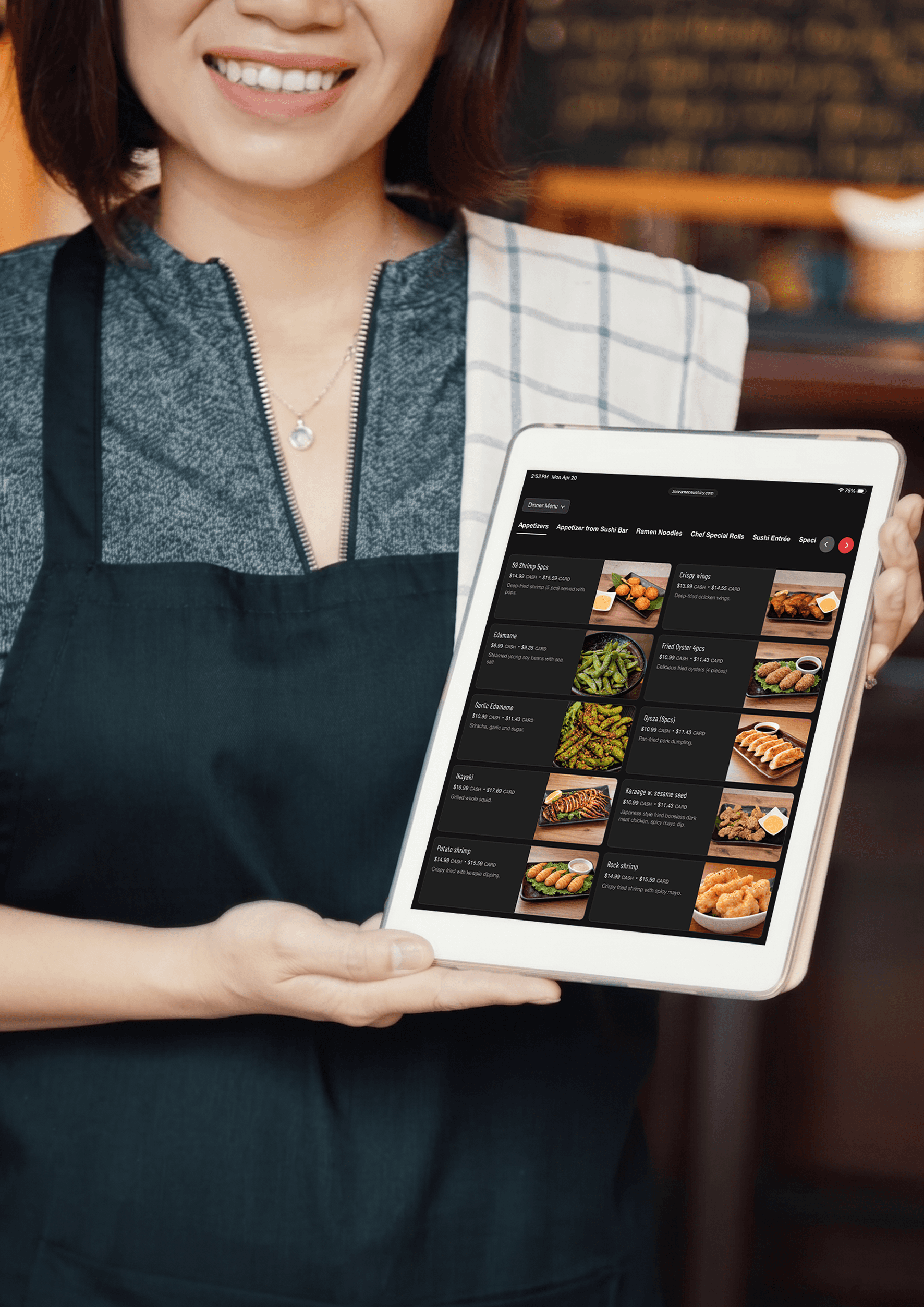
Zen Ramen & Sushi is a busy NYC restaurant where printed menus create extra work for staff, generate waste, and make updates harder than they should be.
I designed a digital menu system that reduces staff workload, minimizes paper use, and makes updates simple to manage.
02. THE PROBLEM
Static menus don’t scale
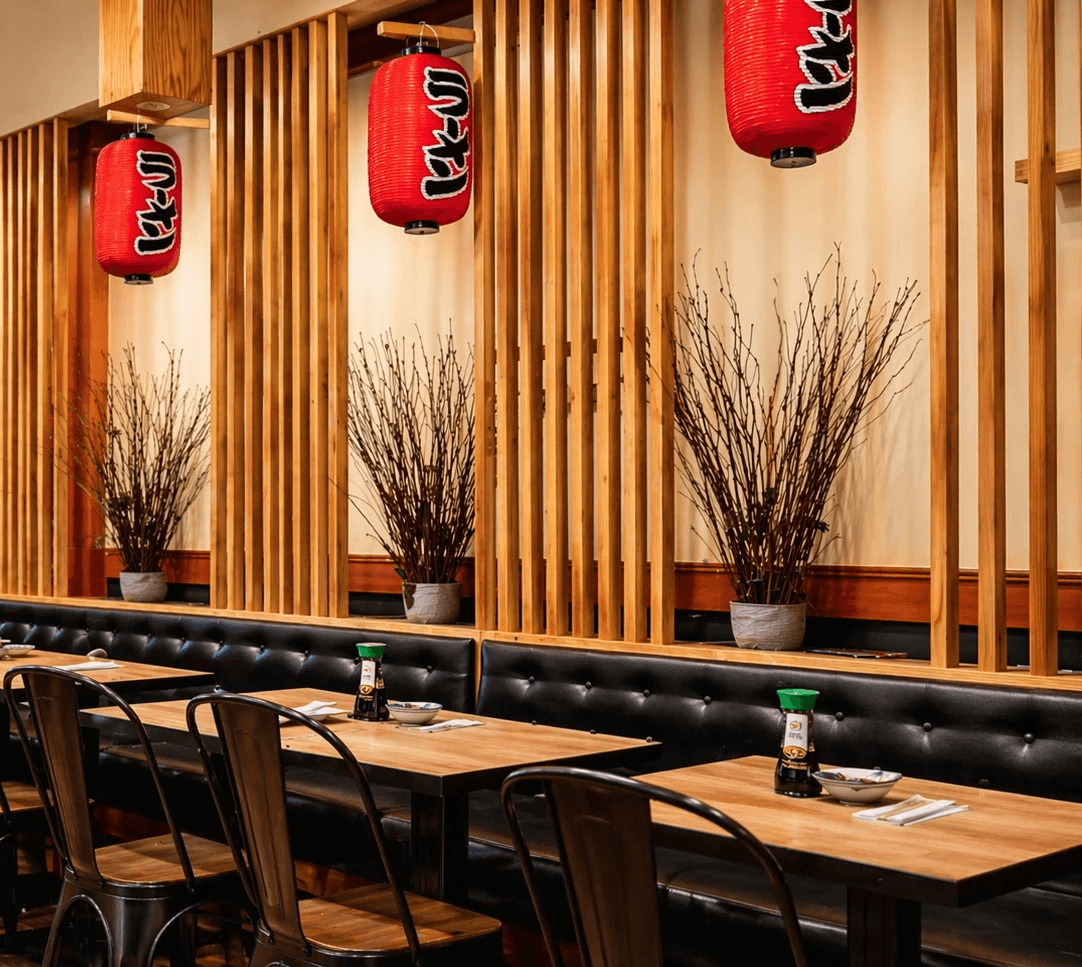
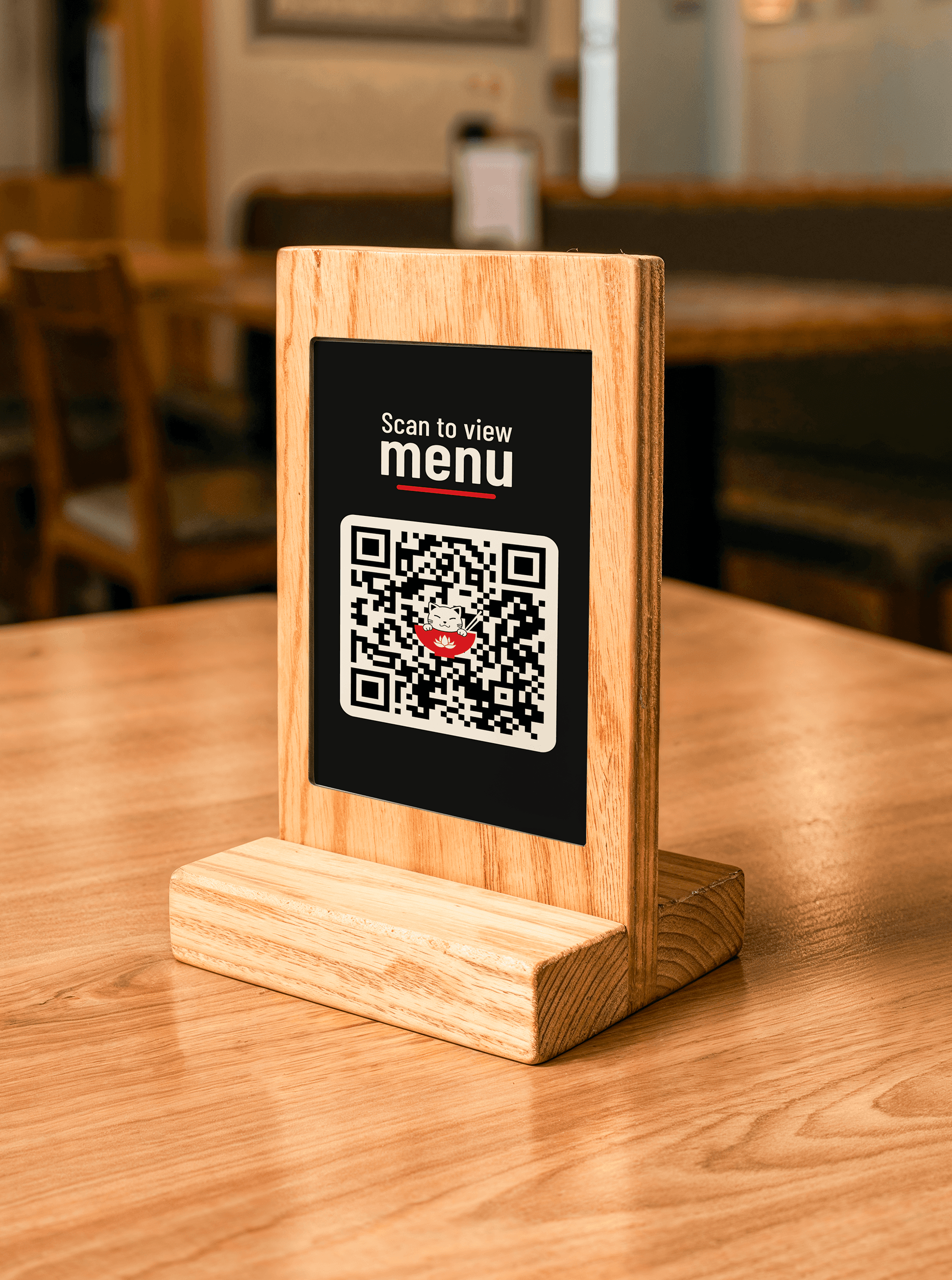
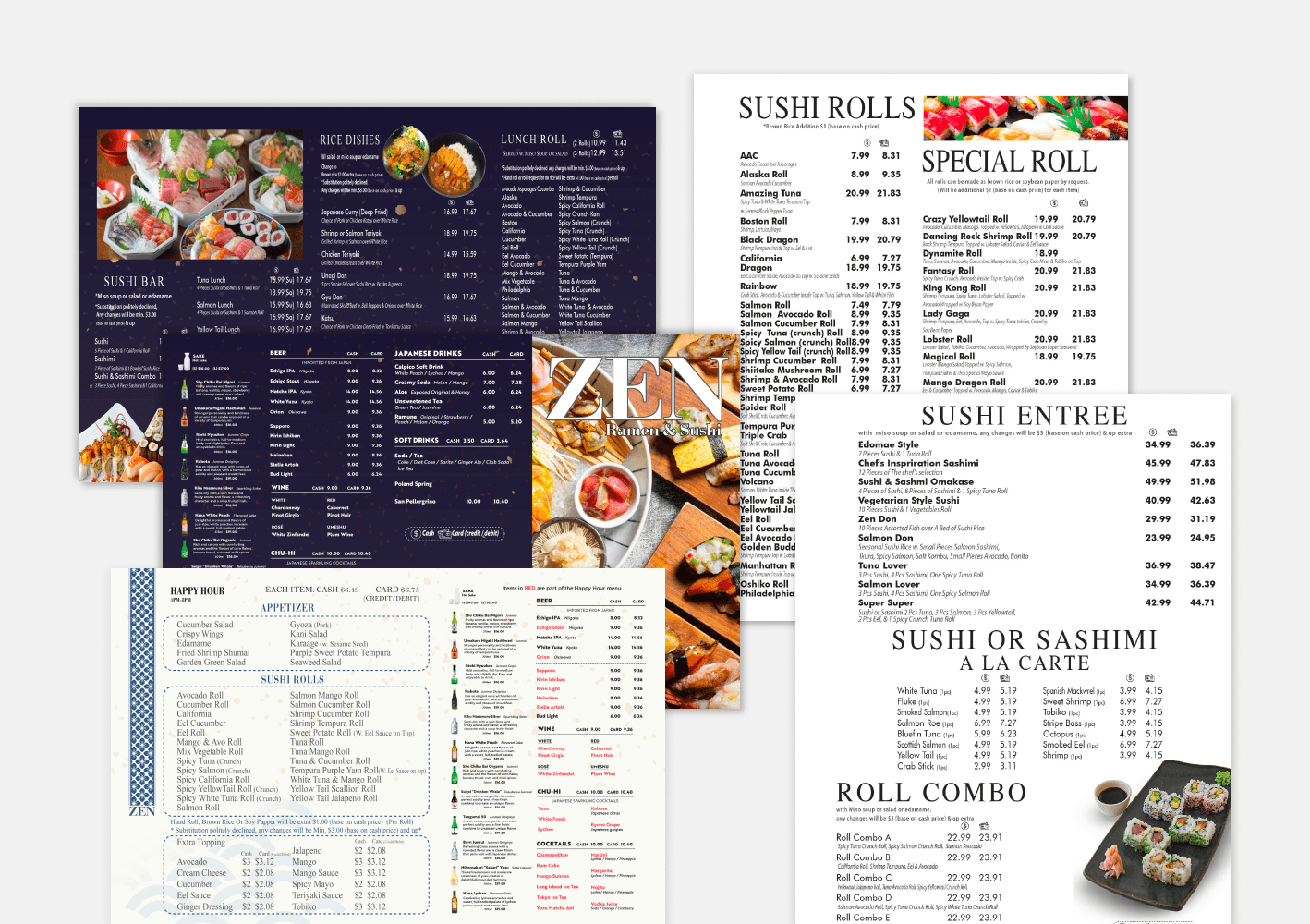
Zen Ramen & Sushi is a high-traffic NYC restaurant with a large menu across dinner, lunch, and happy hour. Menus change often and need to be easy to browse. PDFs and paper menus were hard to scan and difficult to maintain. The goal was to create a menu that is easy to navigate and simple to manage.
03. DESIGN APPROACH
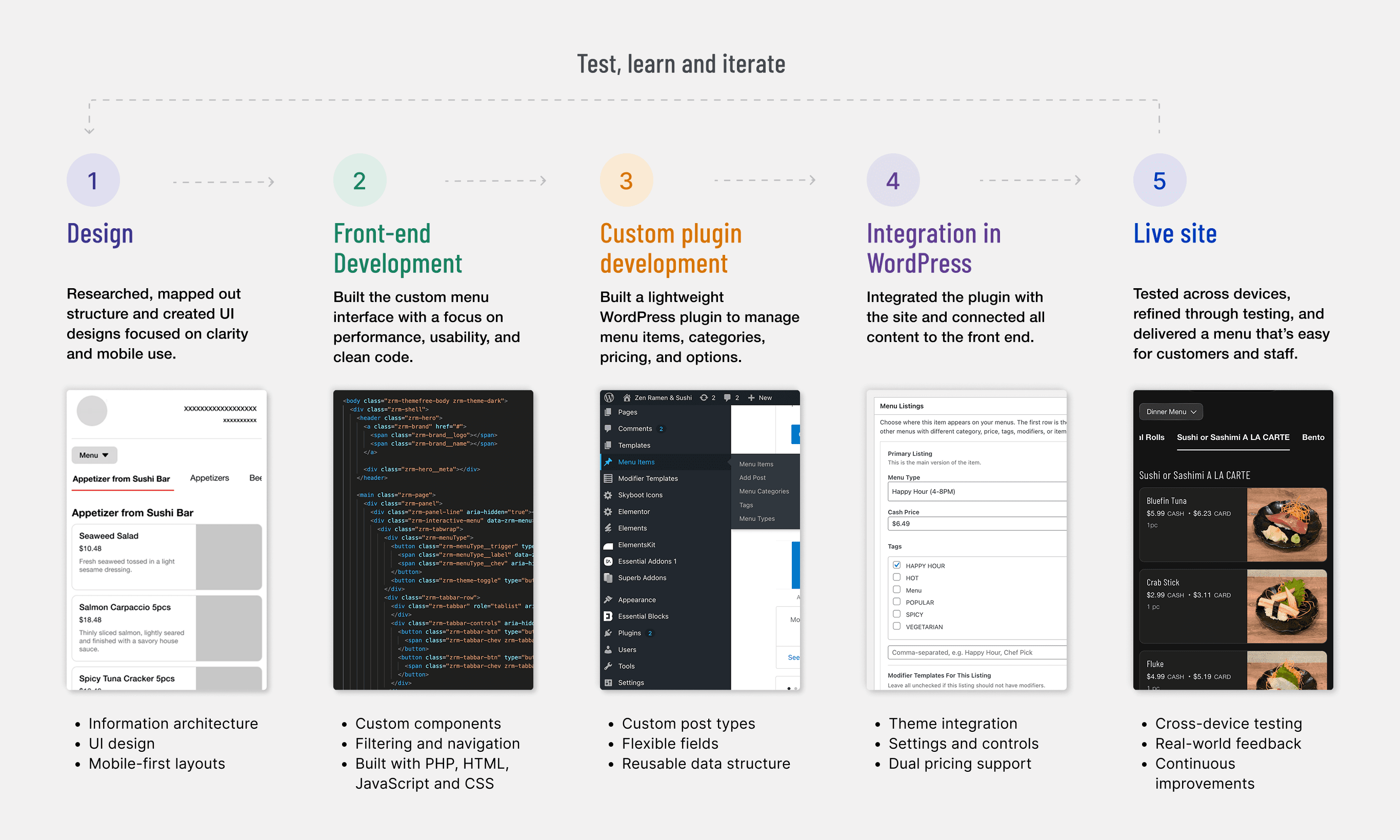
From menu to system
Scaling a complex menu
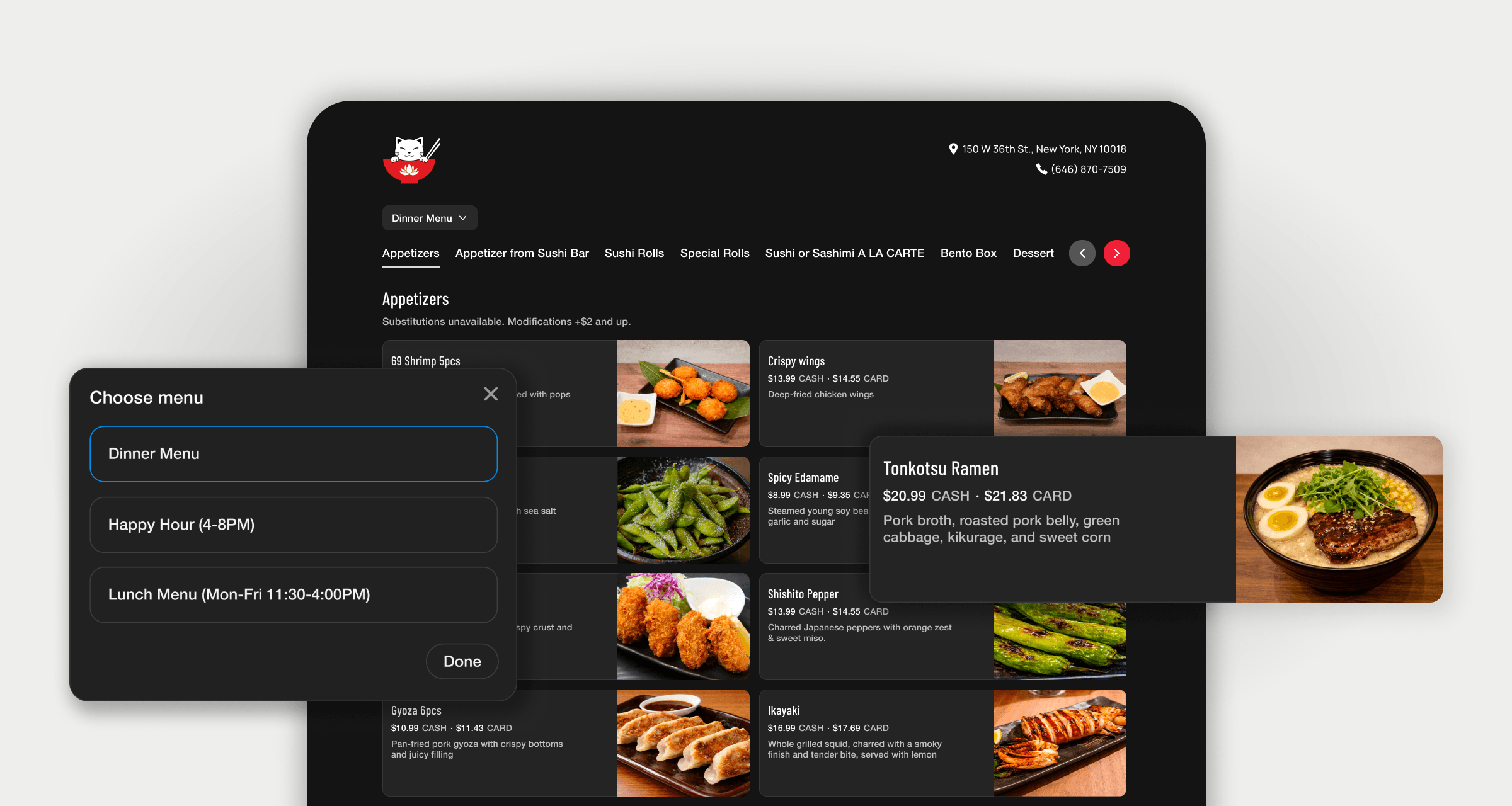
The restaurant offers a large menu across dinner, lunch, and happy hour. Each item also includes both cash and credit card pricing, adding to the amount of information displayed. As the menu grew, the interface needed to present more content while staying clear and easy to browse on mobile, while still supporting updates for staff.
Bridging front end and backend
To support frequent updates, I designed a system that separates content from the interface. Menu items, categories, and pricing are managed in WordPress, allowing staff to update content without changing the UI. This keeps the experience consistent while making updates faster and easier for staff.
04. OUTCOME & IMPACT
A menu that supports easy browsing and content management
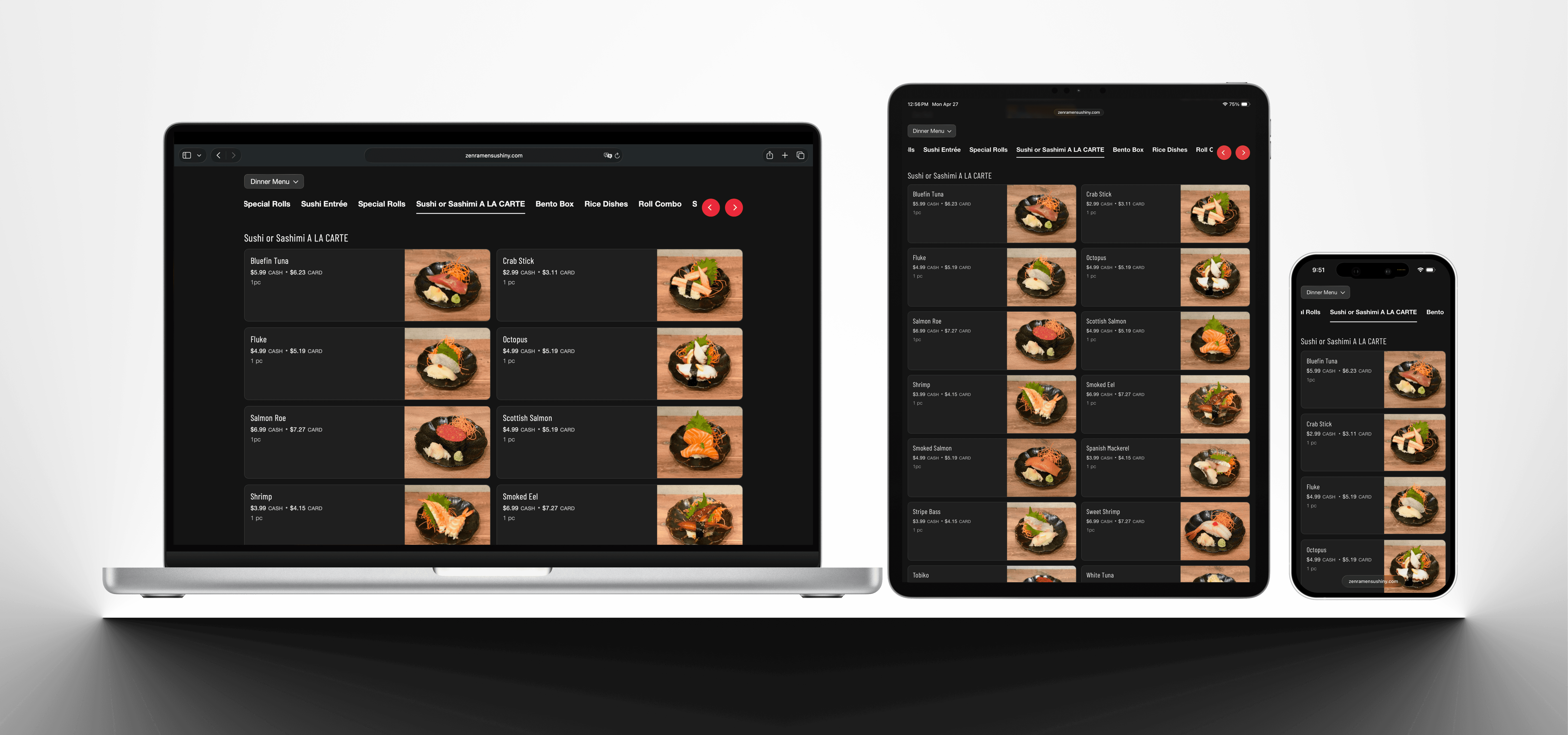
Designed for mobile and beyond
The menu system was designed to support large amounts of content across mobile, tablet, and desktop without losing clarity. As the restaurant expanded its offerings and pricing structure, the interface needed to stay easy to browse while adapting to changing content over time.
Built for easy updates
To support frequent menu changes, the system separates content management from the interface itself. Menu items, categories, pricing, and tags are managed through WordPress, allowing staff to update content quickly without affecting the browsing experience.
Structured for intuitive navigation
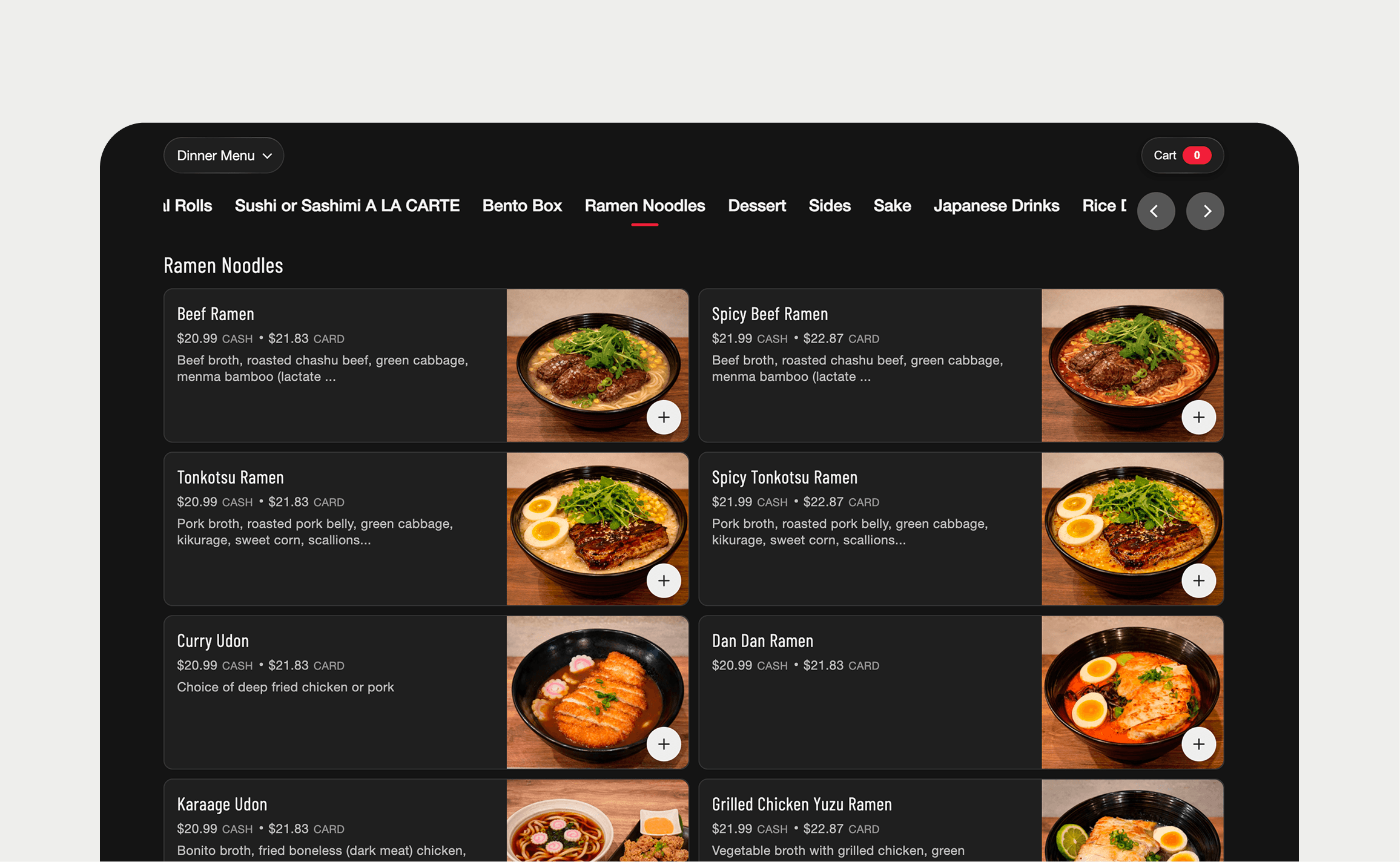
The browsing experience was designed to help users move through a large menu without losing context. A persistent category bar and clear content hierarchy make it easy to jump between sections while keeping navigation predictable and lightweight, even across dense menu structures and dual pricing.
Card layouts designed for fast comparison
Each menu card was intentionally structured to keep pricing, descriptions, imagery, and actions consistently placed across the experience. This makes dense menu content easier to compare and browse quickly, even with dual pricing and a large number of items.
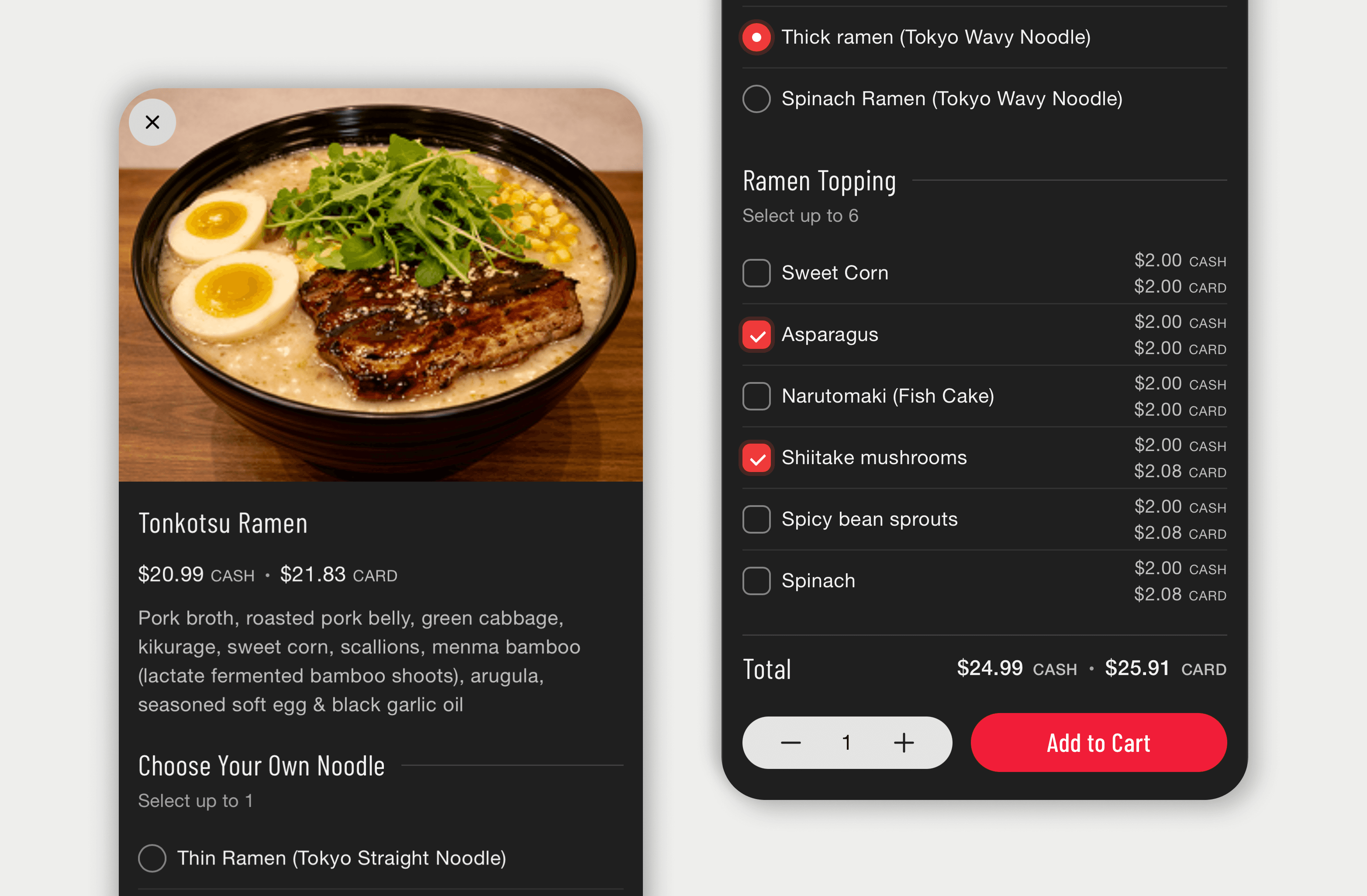
Clear selection with dual pricing
The restaurant has a wide range of add-ons, each with both cash and card pricing, making even simple selections cognitively heavy.
I designed a structured selection flow that keeps pricing visible at every step, so users can customize without losing track of cost.
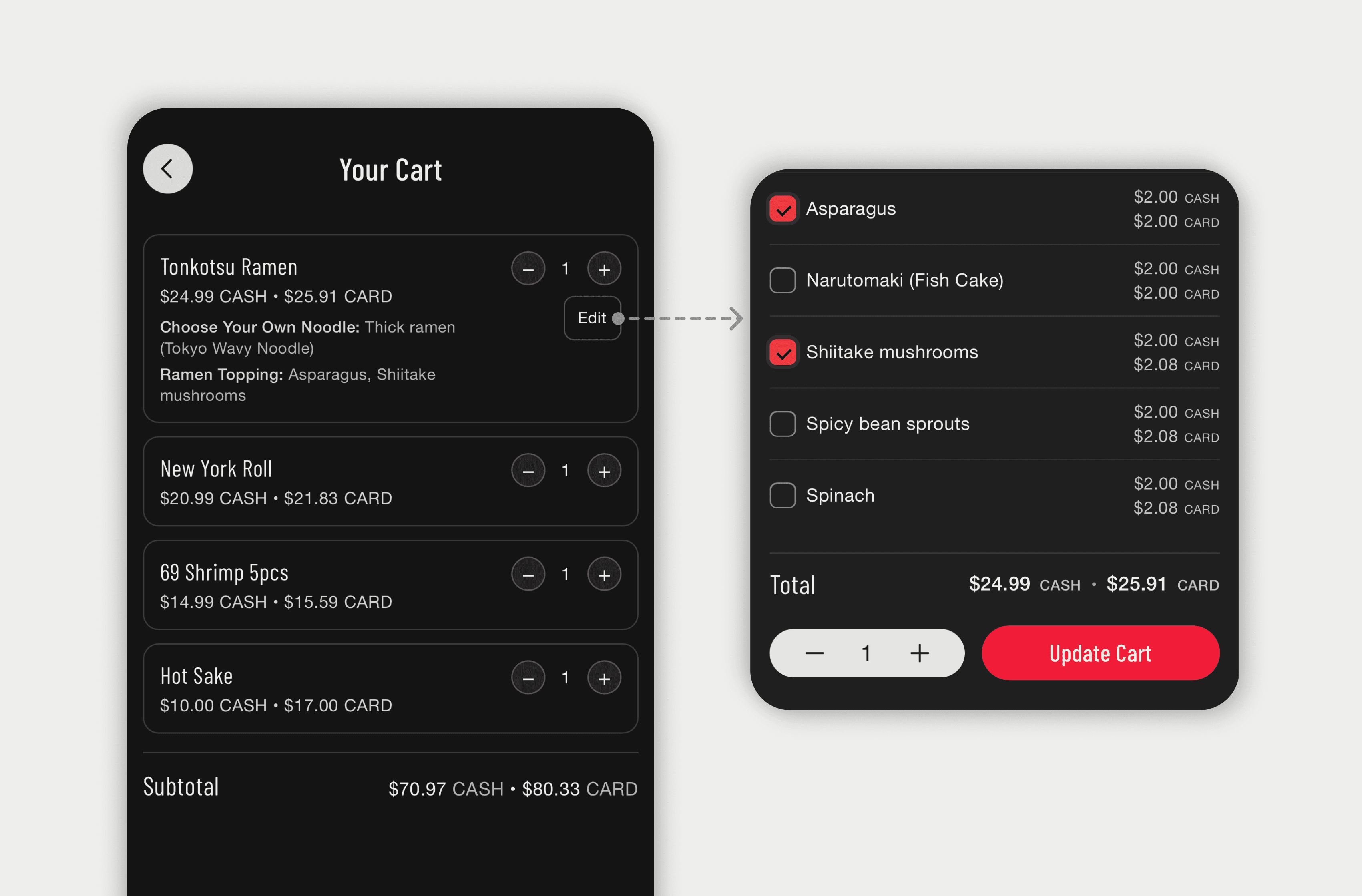
Minimized checkout friction
The cart keeps selections, modifiers, and dual pricing visible in one place, making it easy to review, edit, and confirm an order.
A manageable CMS structure
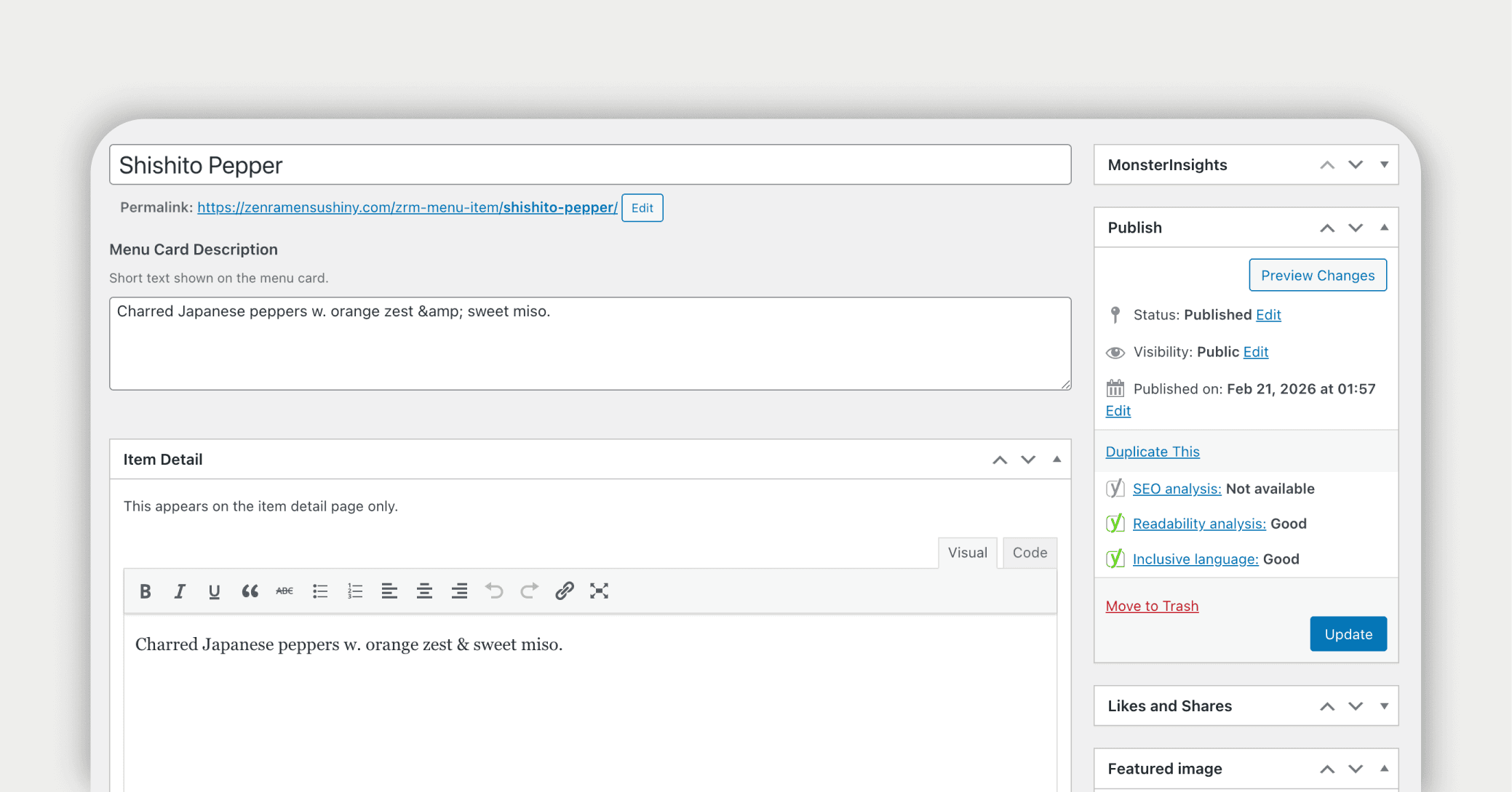
The menu system was designed to be easily maintained by restaurant staff through WordPress. Menu items, descriptions, pricing, categories, and tags can be updated directly through a structured admin interface, allowing content changes without touching the front-end layout or code.
04. Reflection
Building beyond the UI
This project pushed me to think beyond just screens and visual design. I had to consider how the system would actually function day to day, from handling dense menu structures and dual pricing to making updates manageable for restaurant staff.
Alongside designing the experience, building the menu system also meant independently working through technical constraints, WordPress limitations, and responsive behavior throughout the process.
What I enjoyed most was finding ways to simplify a surprisingly complex experience without making it feel restrictive. Since the system was built to be flexible from the start, it also created a foundation that could scale to future locations or even other restaurants with similar operational needs.